Fight, Accelerate, and the Impossible Circle
A car accident, a 92% vote, an unfinished deal with Avicii, and a recording studio inside a Charlotte jail
Some stories sound invented because life has edited them too perfectly.
This one begins in a recording studio and, more than a decade later, returns to another recording studio—this time inside a jail in Charlotte, North Carolina.
Between those two rooms are my mother, a coma, a song called “Fight,” a 92% vote on national television, Avicii, an investment deal that never closed, and a journey that taught me what music can do when ordinary language is no longer enough.
The call that interrupted “Accelerate”
I was in the studio producing a song called “Accelerate” with TripL, the Israeli DJ and producer Lior Brosh. I was intensely excited. The session felt alive; the song felt as though it was opening a new creative direction for me.
Then my mother’s best friend called.
She had been waiting for my mother, Hana, for more than an hour. My mother had not arrived and was not answering her phone. I stopped the recording session and rushed away.
What followed was the discovery that my mother had been involved in a catastrophic car accident. She was taken to the hospital in critical condition and would remain hospitalized for more than a year, including months in a coma.
A war had begun only days earlier—one of the recurring wars between Israel and Gaza—and missiles were falling around us. In the emergency room, surrounded by the violence and unreality of those first hours, I asked the doctor the only questions I could form:
“Is she alive? Can she hear us?”
He did not offer false certainty.
“I can’t promise,” he told me, “but I think she can. Speak to her. Sing to her. I believe it can’t hurt, and maybe it can even help.”
The song that formed beside her bed
The first music of “Fight” had already begun boiling in my head on the way to the hospital.
The song did not arrive fully formed. It accumulated day by day: in corridors, beside machines, during hours when nobody could tell us what my mother could hear or whether she would return to us. It became a promise directed toward her—a refusal to accept that silence was the end of the conversation.
I recorded a simple version on piano and played it to her repeatedly.
I sang about holding a broken heart, stopping it from bleeding, taking pain away, finding enough strength to save another day, and fighting again for life. The words were not written to impress an audience. There was no audience. There was only my mother, unconscious in a hospital bed, and the possibility that somewhere inside the coma she could still hear me.
Eventually, she woke up.
Music alone cannot be credited for a medical recovery, and I would never reduce the work of her doctors, her body, or the people who cared for her to a convenient miracle story. But music became the language through which I remained connected to her when I had no other way to reach her. “Fight” was created for that purpose before it ever became a performance.
Why 92% was never only a score
The producers of The Next Star for Eurovision wanted me on the show because they understood what existed inside the song. This was not a manufactured television backstory attached to a generic performance. The story and the music were inseparable.
On December 18, 2015, I performed “Fight” during the third season of The Next Star. My mother—herself a music teacher—came onto the stage, and my family performed with me.
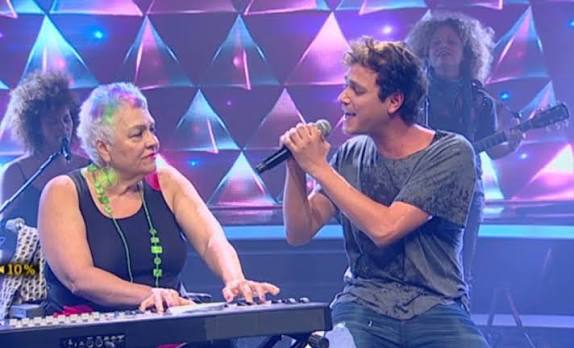
The judges all voted yes. The result was 92%, and I advanced.
Of course, I am proud of the song and the performance. But the number was not simply a technical judgment of composition or vocal ability. The people watching were seeing the person for whom the song had been written standing beside me. They were not being asked to imagine the fight. They were meeting the family that had lived it.
A contemporary review titled “Uriel Aharoni—for Mother and Israel” described the performance as deeply moving and suggested, only partly joking, that the competition could already declare the Aharoni family Israel’s representatives for Eurovision.
The 92% belonged to the story embodied onstage.
Avicii did not like “Fight”
Later, my life moved back toward technology and entrepreneurship. I became co-founder and CTO of Hippo Technology, a California startup working on an alternative to traditional security deposits.
Through that company, I was introduced to Tim Bergling—Avicii—as a potential investor.
There was a valuation disagreement among my co-founders. I proposed a structure that made sense only for someone whose two lives—technology and music—had never really been separate. If the company itself could not move sufficiently on valuation, I would personally sell part of my own holding on terms that recognized the value of a musical collaboration. Avicii and I would produce a song together, and the adjusted economics would allow him to end up with more shares.
It was, in effect, a song-for-equity proposal.
I sent Tim “Fight” and the recording from The Next Star. The correspondence still exists in my personal archive. His response was warm, direct, and honest: the song was not his cup of tea, although he found it inspiring.
It is one of my favorite creative rejections.
Because the story did not end there.
Tim later chose another song: “Accelerate.”
The song he selected was the same song I had been recording with TripL when the call came about my mother—the song interrupted at the moment our lives changed. Tim and I went on to produce “Accelerate” together.
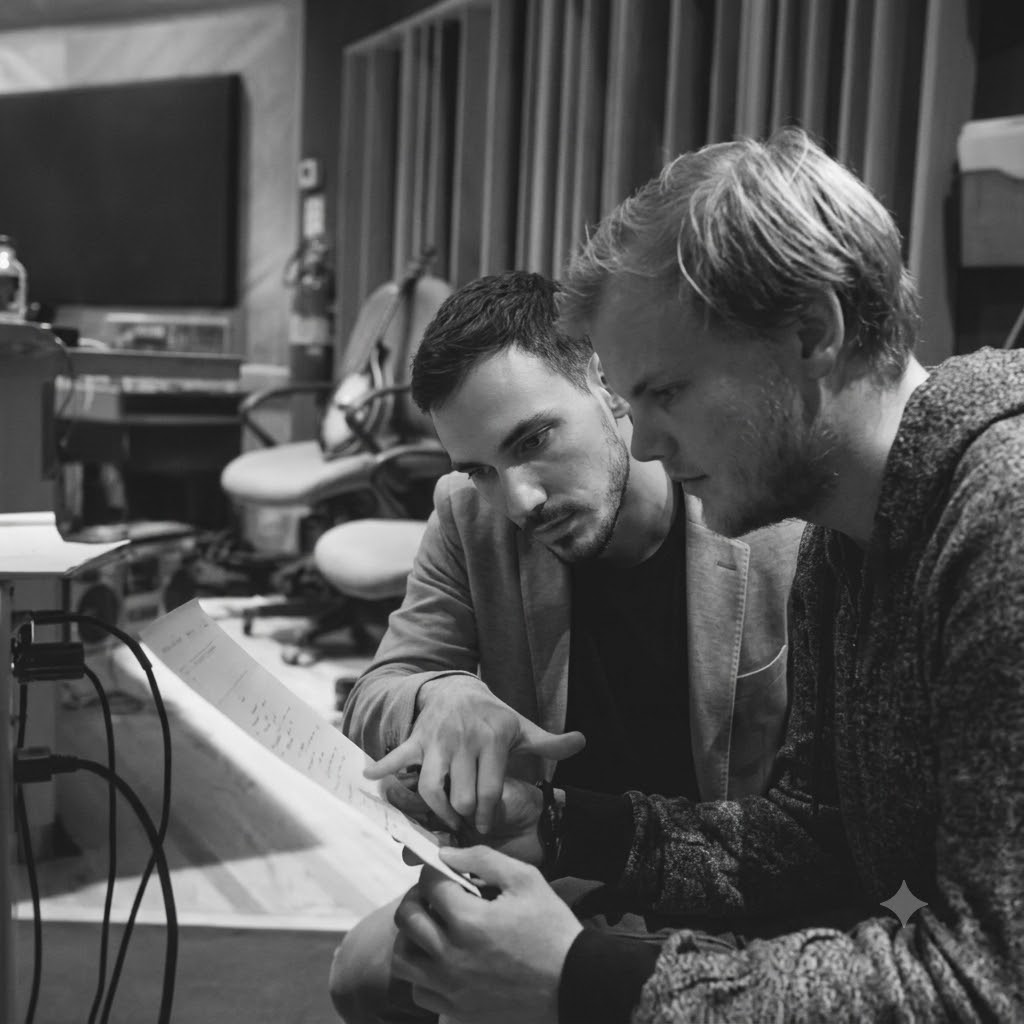
The circle had returned to its beginning: “Accelerate” was interrupted by the accident; “Fight” was born from the accident; “Fight” took my family and me to The Next Star; and the televised song eventually led Avicii back to “Accelerate.”
The deal that never closed
Before the proposed investment and collaboration structure could fully come to fruition, Tim was hospitalized again.
On April 20, 2018, Avicii died.
The deal was never completed. What remained were the correspondence, the music we had worked on, and the strange knowledge that a business negotiation had briefly opened a creative path between two people who might otherwise never have met.
For years, I carried the story privately. It sounded too improbable when compressed: a technology founder, a song written for his mother in a coma, a Eurovision television audition, a proposed equity transaction with one of the world’s most influential musicians, and a collaboration that ended before the deal could be realized.
Then I told it in Charlotte.
The founders’ dinner
During Charlotte Fintech Week, I attended the CLT Founders Dinner hosted by T Palmer Agency. Each founder was asked to introduce themselves.
I was the first person in the room to expose the artist alongside the entrepreneur. I told the story of “Fight,” “Accelerate,” and Avicii.
The room changed. People reacted with the same mixture of disbelief, amusement, and emotion that the story still creates in me.
Later that evening, at around 10 p.m., Yoni returned to our Airbnb with a producer from T Palmer and a friend of hers. The friend explained why the story had affected her so deeply. She had grown up watching her father use music in prison rehabilitation. She had helped advocate for the county jail to adopt a music-based rehabilitation program, and Avicii’s family foundation—the Tim Bergling Foundation—had contributed to creating its recording studio.
She invited us to visit as honored guests.
The second recording studio
The studio sits inside Mecklenburg County Detention Center in Charlotte. It is called Studio W5HY?, reflecting the questions at the center of its rehabilitation program: who, what, when, where, why, and how.
The broader program is called “Rhythm & Reflection: A Journey to Reformation.” It gives incarcerated people a place to make music, write, speak, reflect, and learn the business of music. An Avicii mural looks over the room. The studio was funded in large part through the Tim Bergling Foundation.
When we arrived, we were received with a level of respect I was not prepared for. I do not know exactly what had been said before our visit, but it felt as though the people there believed we belonged to Avicii’s family—or had personally helped fund the studio.
We had done neither.
We were carrying a story.
But in that room, the story connected us to something larger than proximity to a famous artist. The same belief had followed me from my mother’s hospital bed to a recording studio inside a jail: when a person appears unreachable, music can still create a path toward them.
The doctor in the emergency room had told me to speak and sing because it might help my mother hear us. More than a decade later, I stood in a studio designed around the belief that people behind bars could use music to hear themselves differently—and perhaps return to the world differently.
That was the part that broke me open.
What survived
My mother survived the accident. She woke from the coma. She stood beside me on national television. She is alive today.
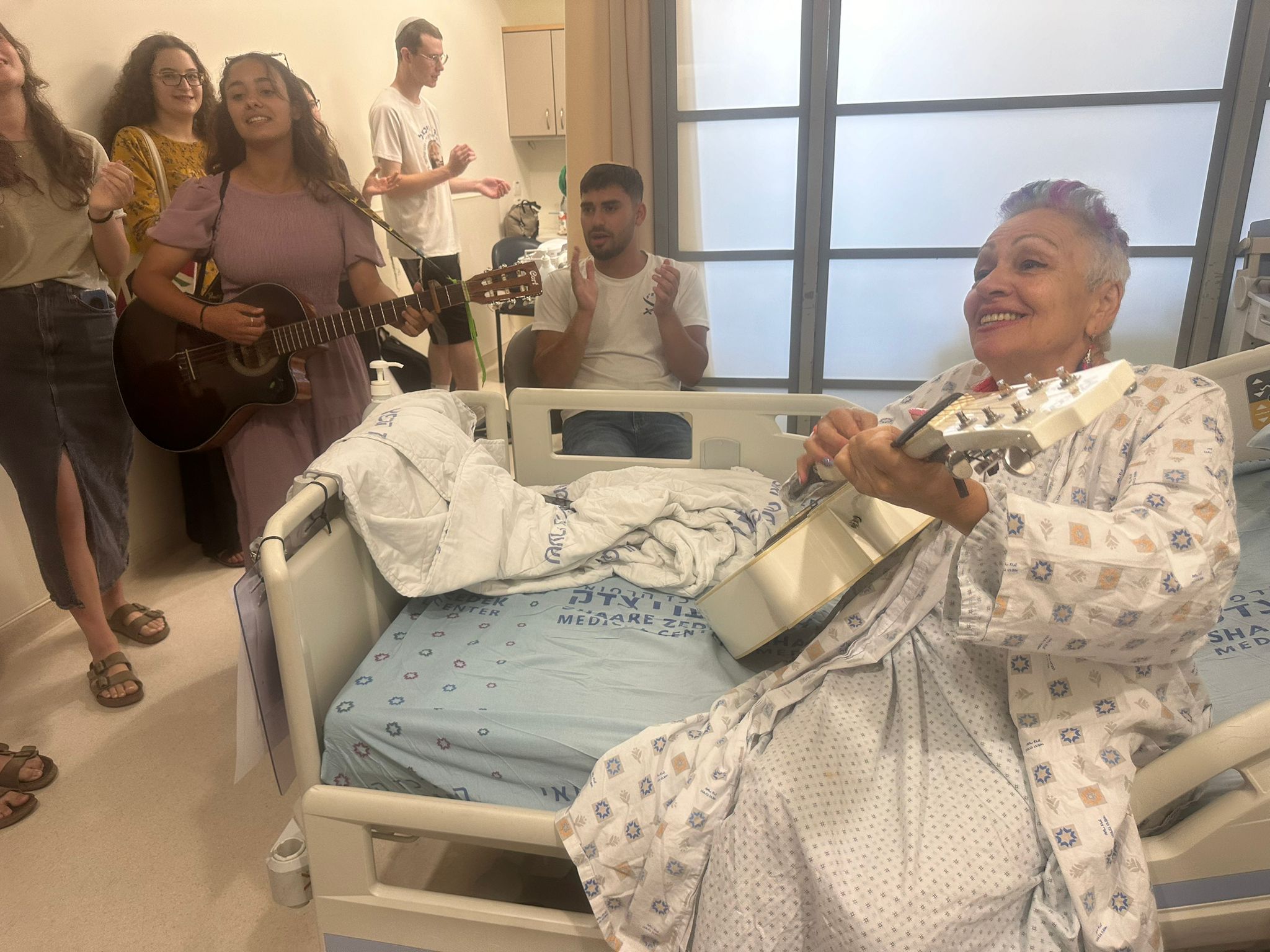
Avicii did not survive the health crisis that followed our work, and the deal we imagined never became a completed transaction.
But unfinished things still shape lives.
“Fight” did what it was written to do long before television gave it a score. “Accelerate” became the unlikely bridge between the worst phone call of my life and one of its most improbable creative opportunities. The Charlotte studio transformed an unfinished story about investment and music into a story about rehabilitation, dignity, and the human capacity to return.
I build technology companies. I research artificial intelligence and complex systems. I teach business leaders. I write and perform music.
For a long time, those identities appeared unrelated to other people. They never felt unrelated to me.
This story is why.
Public record and references
- “Meet Uriel Aharoni” — official Mako profile clip, The Next Star, season 3
- Uriel Aharoni performs “Fight” — official Mako performance clip
- The Next Star for Eurovision 2016 results — 92%, four yes votes, advanced
- “Uriel Aharoni—for Mother and Israel” — contemporary performance review
- “Fight” — original studio version
- Inside Mecklenburg County jail’s recording studio — Charlotte Observer
- Mecklenburg County Detention Center unveils Studio W5HY? — public announcement
- Music studio opens inside Mecklenburg County Jail — Queen City News
About these sources
The televised performance, voting result, contemporary review, and existence and funding of the Charlotte studio are documented in the public sources above. The account of the accident, hospital, composition process, Hippo negotiations, direct correspondence and creative work with Tim Bergling, founders’ dinner, invitation, and personal experience at the detention center is Uriel Aharoni’s firsthand account. Relevant private correspondence and creative materials remain in the author’s archive.